quick links
Cold Dew
November 05, 2025 (written in Chinese, translated to English by ChatGPT)
The Elevator Posters
I moved into that apartment around February. It was new, and people were trickling in. The building staff were especially warm. Perhaps because there were few residents, we became natural nodding acquaintances in the hallway. Inside the elevator there was a poster wall—no ads—just a fresh sheet each month listing community activities. Human nature being what it is, I secretly hoped that one day they would forget and leave up last month’s poster, so I could excuse my own laziness. I would think: the staff, too, are chased by time; the building ages with us. Sadly for me, that never happened. Like clockwork, a new poster appeared at the start of every month. I never joined any event; the new poster was simply the notice that time was moving forward. October’s poster was orange—as if the California suburbs were dotted with people holding lanterns, lighting up the fields.
Everyone has a job. The person who posts the new sheet each month became, for me, the one who nudges time along.
Sound and Temperature
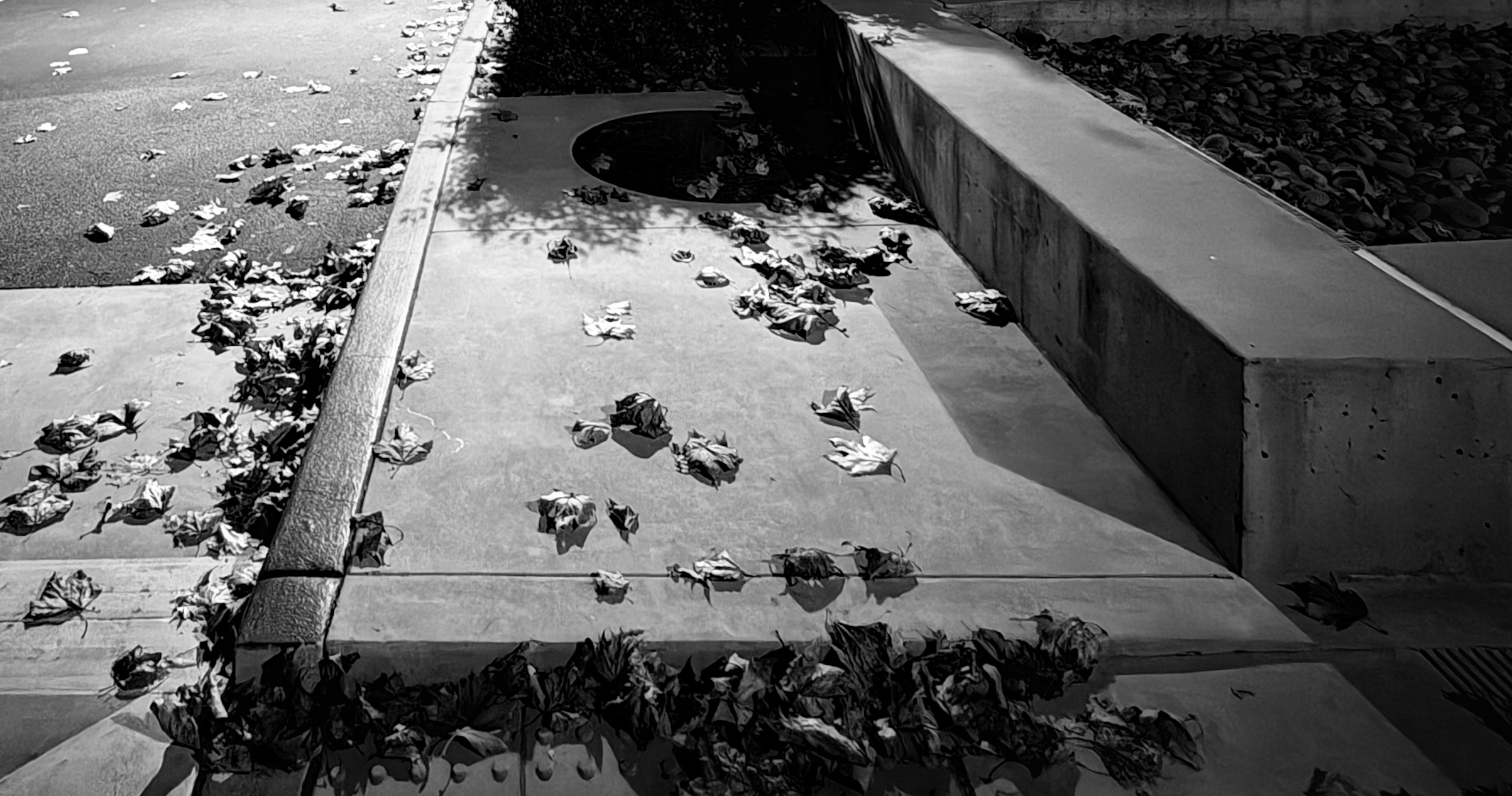
Autumn has a sound—perhaps beginning with the first sigh. Wind brushes the leaves; they whisper; dry leaves drift down. Once they’re crisp, the way they tap concrete is like biting into a potato chip: crack, crack. When the ground is carpeted, you can always find children stomping through—surely it’s soft—squeak, squeak. Laughter lifts the leaves again.
Autumn has a temperature. Sunlight softens as the leaves turn. Evening sun feels like a sweet potato baked just right—golden, crisp at the edges, warmth rushing to the face. Autumn light is indolent. In memory I often recovered from colds in the fall. Sometimes, after the IV drip and the fever broke, I would step out of the hospital and feel that the glow of those evenings was what had cured me.
The sounds and warmth of autumn are private, often running against the tempo of life. You have to slow down. The old and the very young are good at this. The young-adult version of us tends to scoff, favoring only feelings that can be made concrete.
A Day Trip to Dayton
I grew up in Hangzhou. With family we often took short trips—sometimes for work, sometimes to visit relatives. We drove mostly at night. As a child I felt, inexplicably, that I was heading to battle alongside my father. So I loved the night road, and later loved road trips. On the way I would always seek out a rest stop, imagining my younger self thinking: here I can be like the grown‑ups—buy a cup of instant noodles, add a sausage and a braised egg, and slurp it hot.
Back then, riding in the back seat, I could sleep the whole way. From country lanes, to national roads, to the expressway—the journey shrank from four hours to two. The places we stopped changed as well. From Hengdian, Pujiang, Zhuji, to Shaoxing; from the “Sisters’ Restaurant” to highway rest areas. From five‑yuan vegetables, ten‑yuan small meat dishes, fifteen‑yuan clay pots, with rice free; to today’s influencer shops selling Inner Mongolia beef jerky. The people on the road changed too. Before, behind the glass, side dishes were lined up on steam‑heated metal counters; the auntie in a white coat would chat as she scooped. We always arrived at night—few people around. My parents liked to scald bowls and chopsticks with hot water. We would huddle together. When work came up, I only listened, yet somehow it felt related to me—I was part of it, blood running in the same line.
Even on my last trip back to China I would still, inexplicably, search out an unassuming fast‑food joint. Dishes laid out on a steaming metal counter. I can’t order much now, but I still rinse the bowls in hot water. Huddled together at the table, it becomes those nights again.
Many years ago, the first time I rode in a classmate’s car, it felt off—like a child driving an adult’s car. If the destination was within an hour, no one slept; we sang all the way. The trip to Dayton was an afternoon caravan—two or three cars. I drove; someone in my car fell asleep. When we arrived, sunlight poured into the cabin, laying half across a face. I pulled the car into the shade. I didn’t wake them. I thought, let me take part in that dream too.
Cold Dew
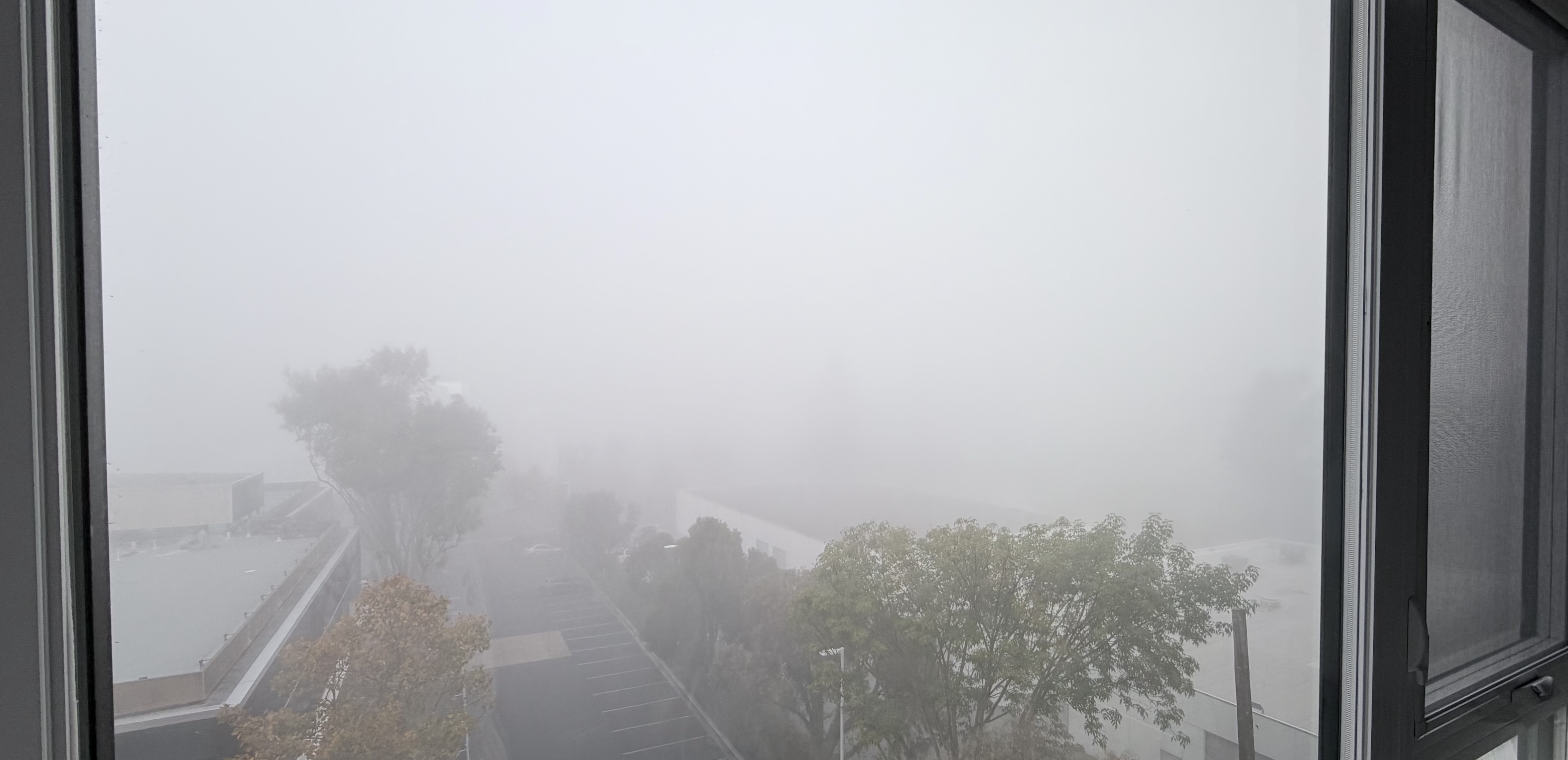
It is autumn now. If you wake early—six or seven—you’ll see the cold dew on the window. Outside, a white sheet of fog. By eight or nine the sun clears it, and the world, made sharp, becomes concrete again.